1. Sensor facts
Raw perception and telemetry are mapped to symbolic predicates.
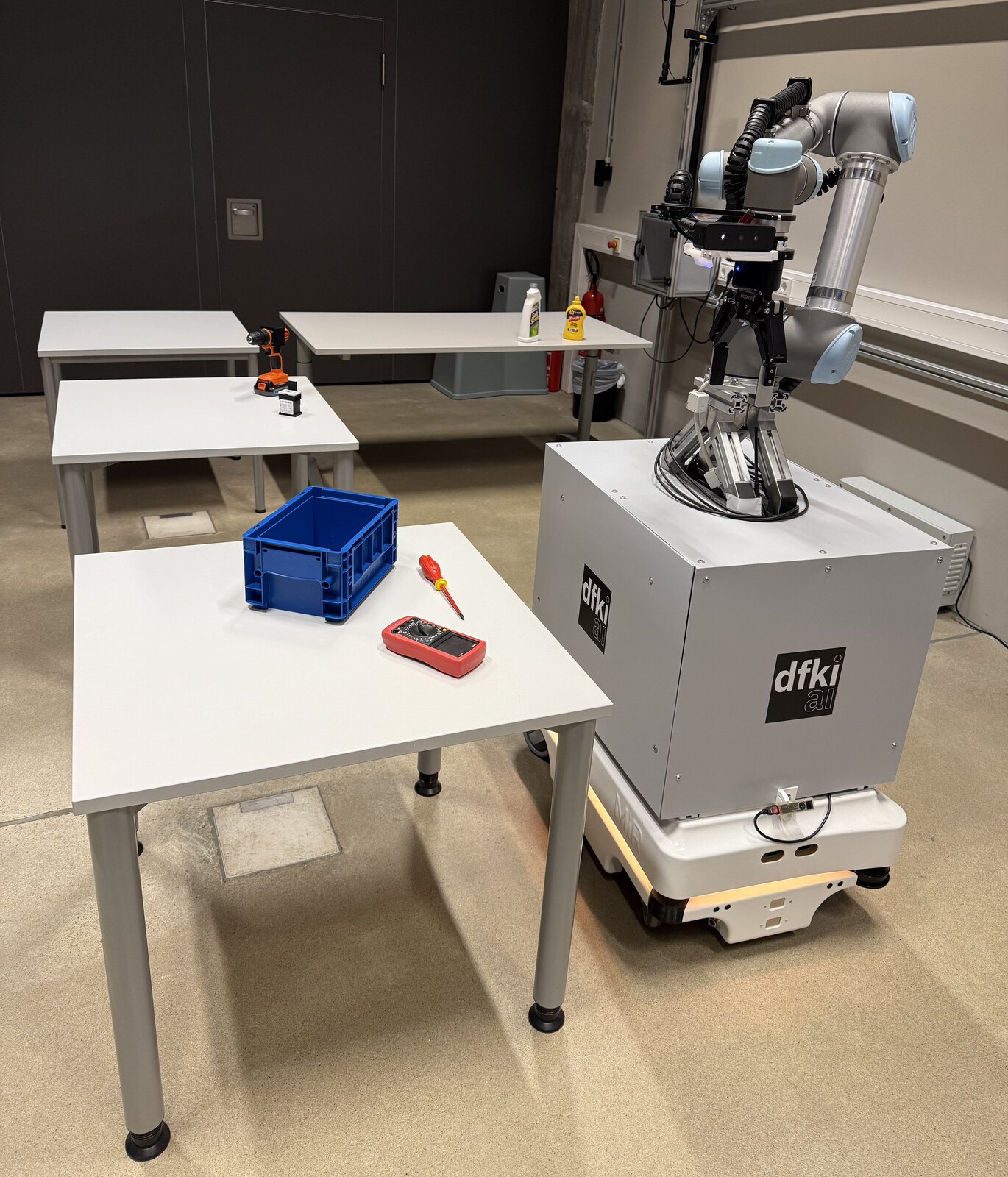
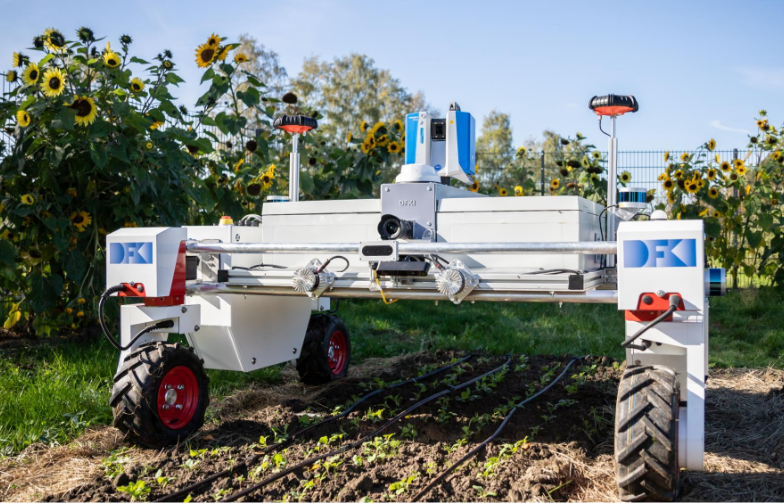
Current research leverages generative models capabilities and common sense for robot control. In this paper we present such a system, where a reasoning capable model plans and executes tasks by selecting and invoking robot actions within an agentic workflow that controls real robots in two settings: (i) autonomous agricultural navigation and sensing and (ii) tabletop object grasping, placement, and box insertion. Both settings involve uncertainty, partial observability, sensor noise, and ambiguous natural language commands. The system provides transparent introspection into its planning and decision processes, reacts to exogenous events, and supports operator interventions modifying or redirecting current execution. Experiments on two distinct robot platforms reveal substantial fragility due to hallucinations, nondeterministic behaviour, instruction following errors, and high sensitivity to prompt specification. On the other hand, we show that such a system is very flexible and easy to adapt to other robotic systems with a few changes in the system prompt and robot interface bindings.
Core claim: LLMs can control robots through a constrained action API and symbolic state, but long-horizon execution is still brittle.
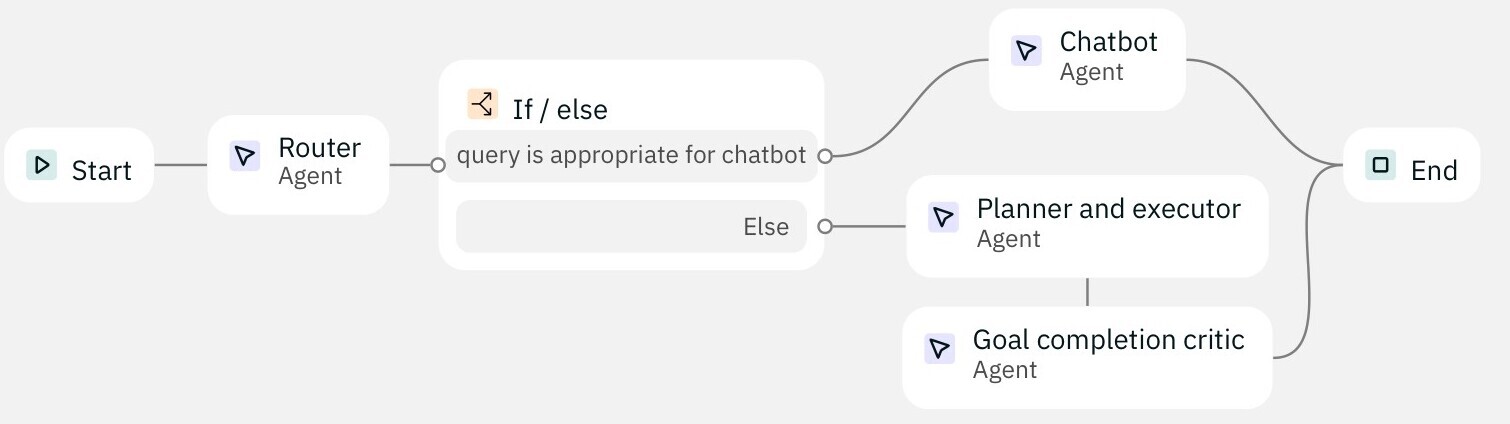
Multi-agent loop: route → plan/act (or ask questions) → monitor → critic.
Raw perception and telemetry are mapped to symbolic predicates.
The LLM can reflect, act once, read semantic snapshots, and poll events.
Execution stays in ROS/MoveIt or platform APIs, not raw joint control.
Same schema across a mobile manipulator and an agricultural robot.
Experiment 1. Nominal Task Execution (Mobipick)
Experiment 2. Ambiguous Command and Event Handling (Mobipick)
Experiment 5. Nominal task execuion outdoors (Simulation, Valdemar)
Experiment 6. Low Battery Monitoring (Simulation, Valdemar)
Experiment 7. Invalid Command Refutal (Simulation, Valdemar)
@inproceedings{lima2026agentic,
  title     = {{Agentic AI for Robot Control: Flexible but Still Fragile}},
  author    = {Lima, Oscar and Vinci, Marc and G{\"u}nther, Martin and Renz, Marian and Sung, Alexander and Stock, Sebastian and Brust, Johannes and Niecksch, Lennart and Yi, Zongyao and Igelbrink, Felix and Kisliuk, Benjamin and Atzmueller, Martin and Hertzberg, Joachim},
  booktitle = {Proceedings of the AAAI Symposium Series},
  volume    = {8},
  number    = {1},
  pages     = {465--473},
  year      = {2026},
  doi       = {10.1609/aaaiss.v8i1.42578},
  url       = {https://ojs.aaai.org/index.php/AAAI-SS/article/view/42578}
}